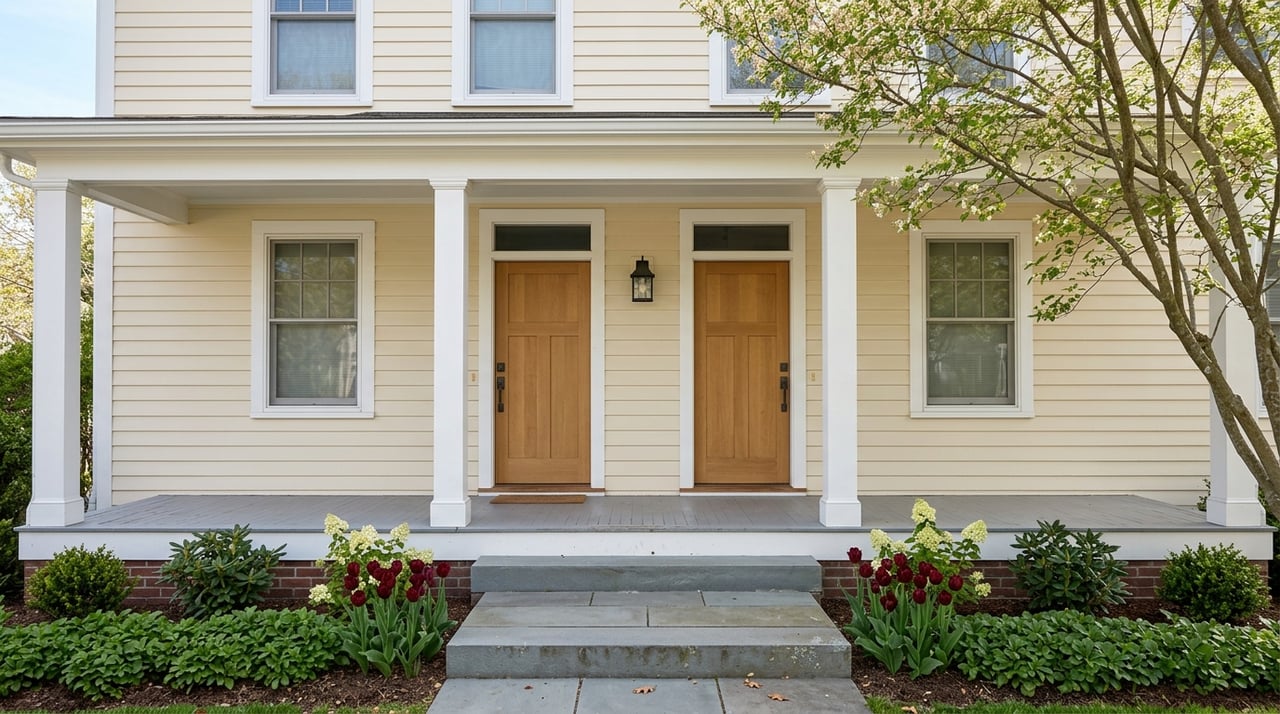
Newtonville Single-Family Or Condo? How To Decide
July 2, 2026
July 2, 2026
Wondering whether a single-family home or a condo is the smarter move in Newtonville? You are not alone. In a market where both options can come with a substantial price tag, the real question is not just what you can buy, but what kind of ownership fits your budget, routine, and long-term plans. This guide will help you compare the tradeoffs so you can make a more confident decision in Newtonville. Let’s dive in.
Newtonville has long been shaped by its village-style layout and rail-oriented history. As the area developed in the late 19th century, the railroad station helped draw Boston commuters and influenced the housing pattern around Walnut Street and the commercial center.
That history still matters today. Some buyers want more land and privacy, while others are comfortable giving up yard space to stay closer to village conveniences and commuter rail access.
Current inventory shows that both product types are meaningfully present. Recent listing snapshots show about 28 single-family homes and 21 condos in Newtonville, which gives you real choices rather than a one-sided market.
Newtonville is an expensive market, no matter which path you choose. Recent snapshots show a median listing home price around $1.9 million, a median listing price of $576 per square foot, and a median of 16 days on market.
That pace and price point help explain why your decision should go beyond sticker price. You need to think about monthly carrying costs, upkeep, and how each property type fits your lifestyle.
Citywide context supports that picture. Newton assessors reported a 2025 single-family median sale price of $1.85 million, and single-family and two-family homes make up almost 80% of assessed value across Newton.
Detached homes in Newtonville currently start around $1.05 million and run above $5.1 million. Many available homes fall roughly in the $1.4 million to $2.5 million range.
The size range is wide. Current examples include a 3-bedroom, 2-bath home around 1,596 square feet, several 4- to 6-bedroom homes between about 2,600 and 4,200 square feet, and estate-sized homes above 6,000 square feet.
Lot size is another major variable. Some homes sit on compact village lots, while others approach about 0.8 acre, which can make a big difference if you care about yard space, privacy, or future expansion.
Newtonville condos currently span roughly $499,000 to $2.75 million. That range is important because it shows the condo market is not limited to small entry-level units.
Current examples include a 1-bedroom unit around 666 square feet for about $499,000, a 2-bedroom unit around 1,126 square feet for about $650,000, and a 3-bedroom unit around 1,954 square feet for about $1.15 million. Larger 4-bedroom condos can exceed $1.9 million.
Some condo units are especially large, including examples around 3,790 and 4,214 square feet. In other words, a Newtonville condo can be either a lower-entry option or a near-single-family alternative depending on the building and unit.
The best choice often comes down to how you want to live day to day. A single-family home usually appeals to buyers who want autonomy, outdoor space, and more control over repairs or renovation decisions.
A condo often works better if you value lower day-to-day upkeep, shared building management, and a more predictable routine. In Newtonville, that tradeoff can be especially relevant because both options may be expensive, but they distribute costs and responsibilities differently.
Before you focus on finishes or square footage, get clear on what matters most to you. Your answer may save you time and help you avoid touring homes that do not match your real priorities.
A single-family home may be the better fit if you want more independence in how you use and maintain your property. You are typically making your own decisions about landscaping, repairs, renovations, and long-term improvements.
This option can also make sense if yard space, privacy, or extra parking are near the top of your list. In Newtonville, lot sizes vary enough that two homes with similar interior square footage may offer very different outdoor living potential.
That said, more control usually means more responsibility. You should be ready for maintenance, unexpected repairs, and renovation costs that fall directly on you.
A condo may be the better fit if you want to simplify your routine. Shared management can reduce the amount of time you spend thinking about exterior upkeep and common-area maintenance.
This can be especially appealing if you travel often, have a busy work schedule, or simply prefer a lower-maintenance ownership experience. Newtonville’s village form and commuter access may also make condos attractive to buyers who prioritize convenience over lot size.
Still, condo living means shared governance. You should feel comfortable with association rules and with the fact that some decisions are made collectively rather than individually.
In Newtonville, the purchase price is only part of the equation. Your monthly cost structure can look very different depending on whether you buy a condo or a single-family home.
For a condo, your total monthly housing cost may include your mortgage payment, property taxes, homeowner’s insurance, and association dues. Condo dues are usually paid directly to the association and are not included in the mortgage payment.
Those dues can vary widely. They may run from a few hundred dollars per month to more than $1,000 per month, so it is important to evaluate them as part of your true budget, not as an afterthought.
With a single-family home, you may avoid monthly association dues, but you take on more direct responsibility for maintenance and repairs. That can make monthly costs less predictable even if there is no HOA line item.
If you are considering a condo in Newtonville, due diligence matters. Under Massachusetts General Laws Chapter 183A, condo owners hold a percentage interest in the common areas, and the association has management and expense-collection powers.
Massachusetts also makes clear that the Commonwealth does not provide regulatory oversight for condominiums. That is why buyers should rely on the master deed, bylaws, financials, and an attorney familiar with condo law.
You should also confirm what the association fees cover. In many cases, condo dues may include master insurance for common areas, but you still need to verify what your own policy must cover.
One of the most important condo questions is whether there are any current or planned special assessments. These can create out-of-pocket costs beyond regular monthly dues.
You should also review the association’s practical rules. Pay attention to policies on pets, rentals, and alterations, since those can affect your daily life and your future flexibility.
This is where details matter. A condo that looks affordable at first glance can feel different once you factor in dues, insurance responsibilities, rules, and possible assessments.
If you are deciding between a single-family home and a condo in Newtonville, ask yourself:
These questions can help you move beyond a simple house-versus-condo comparison. In Newtonville, the smarter framework is to weigh space, privacy, maintenance responsibility, monthly carrying cost, and your comfort level with shared governance.
There is no one-size-fits-all answer in Newtonville. A condo is not automatically the budget option, and a single-family home is not automatically the better long-term choice.
Both can be premium purchases here. The better fit depends on how you want to balance space, control, convenience, and monthly costs in a high-value market.
If you want help comparing specific properties, reviewing tradeoffs, and narrowing in on the right ownership style for your goals, Mckenzie Howarth- can help you evaluate Newtonville options with a local, data-driven perspective.

One of the major story lines over the last year is how well the residential real estate market performed.

Move right in and enjoy a spacious, immaculately customized, and comfortable home that is sure to impress.

The Trend Report curates insights from our exclusive Coldwell Banker Global Luxury Realty and Censuswide survey.

A seller credit is an excellent way to work with a seller to get the outcome you need in this higher interest rate environment.
Real Estate
Exploring How Historical Charm and Market Trends Impact Property Worth


Blending local insight with innovative strategy, this professional delivers a tailored real estate experience. Every move is guided by trust, expertise, and a commitment to achieving the best outcome.

27 Boylston St Suite 310 Chestnut Hill MA 02467